















A shower drain that smells like rotten eggs, sewage, mildew, or dirty water can make an otherwise clean bathroom unpleasant to use. The odor may be strongest when you first enter the bathroom, while showering, or after the shower has been unused for several days.
In many cases, the problem is caused by hair, soap residue, or other organic material collecting inside the drain. Bacteria can grow within this buildup and produce unpleasant odors.
However, a shower drain that smells like sewage may indicate a plumbing problem, such as a dry P-trap, a damaged drain connection, or an issue with the drainage or venting system.
The important thing is to identify the source before pouring cleaning products into the drain.
Some odors can be resolved with straightforward cleaning, while others need a qualified plumber. A persistent sewer-gas smell should not be dismissed as an ordinary dirty drain.
This guide explains why shower drains smell, how to distinguish different odors, how to clean a smelly shower drain safely, and when professional plumbing inspection is necessary.
Quick Answer
A shower drain usually smells because of hair and soap buildup, bacterial biofilm, a dry P-trap, or a drainage-system problem.
To identify and address the cause:
- Check whether the odor comes directly from the drain or from another bathroom surface.
- Remove the drain cover and clear accessible hair and debris.
- Clean the removable drain-cover components with mild detergent.
- If the shower has not been used recently, run water to refill a potentially dry P-trap.
- Check whether water drains slowly, gurgles, or backs up.
- Improve bathroom ventilation and investigate any mold or moisture problems.
- Contact a plumber if a sewage odor persists or several fixtures have drainage problems.
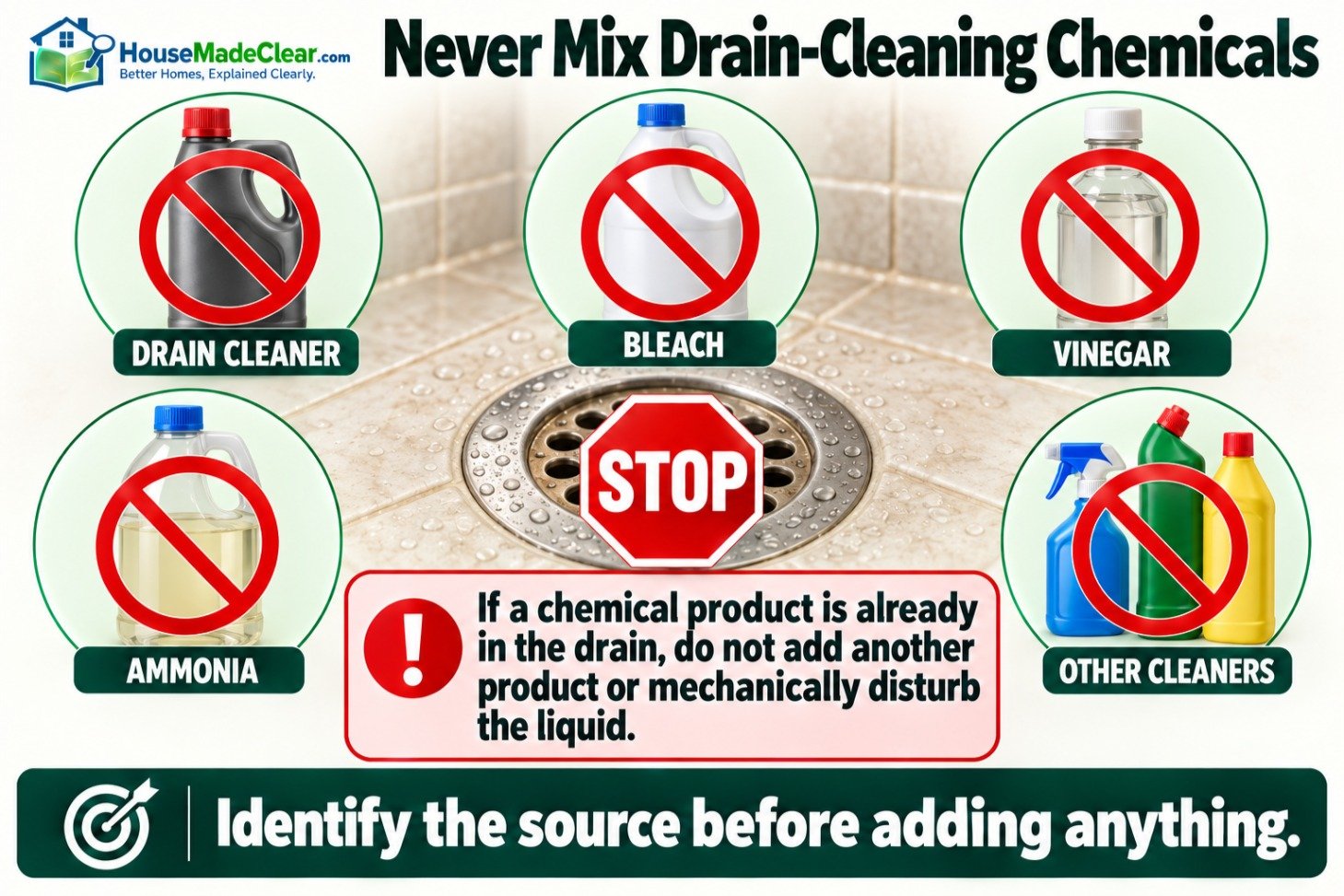
Never mix drain cleaners, bleach, vinegar, or other cleaning chemicals. If a chemical cleaner has already been used, avoid adding more products or mechanically disturbing hazardous liquid in the drain.
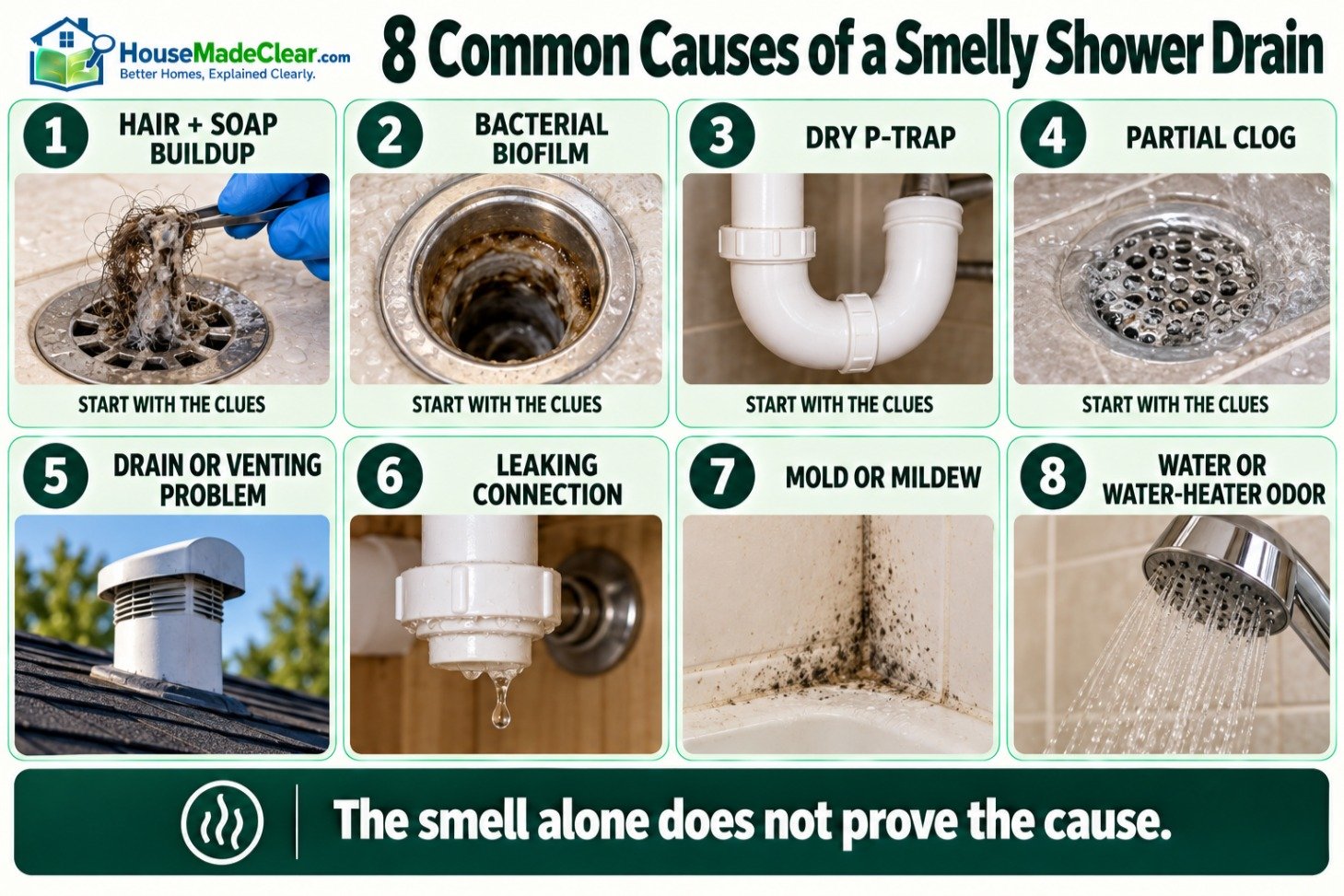
What Causes a Shower Drain to Smell?
The eight most common explanations fall into two broad categories: buildup inside the drain and problems with the plumbing or surrounding bathroom.
| Possible Cause | Typical Clue | First Action |
|---|---|---|
| Hair and soap buildup | Musty, sour, or dirty-water smell | Remove accessible debris |
| Bacterial biofilm | Odor returns soon after surface cleaning | Clean accessible drain surfaces |
| Dry P-trap | Sewer smell after shower goes unused | Run water to restore trap seal |
| Partially clogged drain | Slow drainage and standing water | Remove hair; inspect further |
| Drain or venting problem | Gurgling, recurring sewer odor | Arrange plumbing inspection |
| Leaking or damaged drain connection | Persistent odor, possible dampness | Inspect for leaks; call plumber |
| Mold or mildew around shower | Musty odor beyond drain opening | Find moisture source and clean safely |
| Contaminated water or water-heater issue | Odor mainly when water runs | Compare hot and cold water at fixtures |
The smell alone cannot prove which cause is responsible. The timing, drainage behavior, and location of the odor are also important.
1. Hair and Soap Scum Buildup
Hair and soap residue are among the most common causes of a smelly shower drain.
Every shower can carry small amounts of hair, body oils, dead skin, shampoo residue, and dirt into the drain.
Over time, this material may collect beneath the drain cover or farther into the pipe.
The buildup can trap moisture and provide a surface for microorganisms to grow.
Signs of Hair and Soap Buildup
- The shower drains more slowly than before.
- Hair is visible around the drain cover.
- The smell is stronger near the drain opening.
- An unpleasant odor returns after cleaning the shower floor.
- Water temporarily pools around the drain.
How to Fix It
Remove the drain cover if it is designed to be removed.
Wear gloves and extract visible hair using a suitable plastic drain-cleaning tool.
Clean the cover with mild detergent and water.
If necessary, carefully clean accessible surfaces inside the drain opening without disassembling permanent plumbing components.
Avoid forcing a tool deeper than it is designed to reach.
When the blockage is beyond reach, further mechanical drain cleaning or professional assistance may be necessary.
2. Bacterial Biofilm Inside the Drain
A shower drain can smell even when there is no visible hair near the opening.
One possible reason is biofilm.
Biofilm is a community of microorganisms attached to a surface within a protective layer of material. In plumbing, it can develop on surfaces exposed to moisture and organic residue.
Not every biofilm is visible, and the presence of biofilm does not automatically mean there is a dangerous infection risk.
However, accumulated organic material can contribute to unpleasant odors.
What Does Biofilm Smell Like?
Odors may be described as:
- Sour
- Musty
- Stale
- Swampy
- Dirty or stagnant water
The precise odor varies and is not a reliable way to identify a specific microorganism.
How to Remove Drain Biofilm
The practical first step is physical cleaning.
Remove the drain cover, clear debris, and scrub accessible surfaces with an appropriate brush and mild detergent.
Rinse thoroughly with water.
Avoid assuming that pouring a homemade chemical mixture down the drain will remove biofilm from every internal surface.
For persistent deposits inside inaccessible piping, a plumber may need to evaluate and clean the drain.

3. A Dry P-Trap Is Allowing Sewer Gas Into the Bathroom
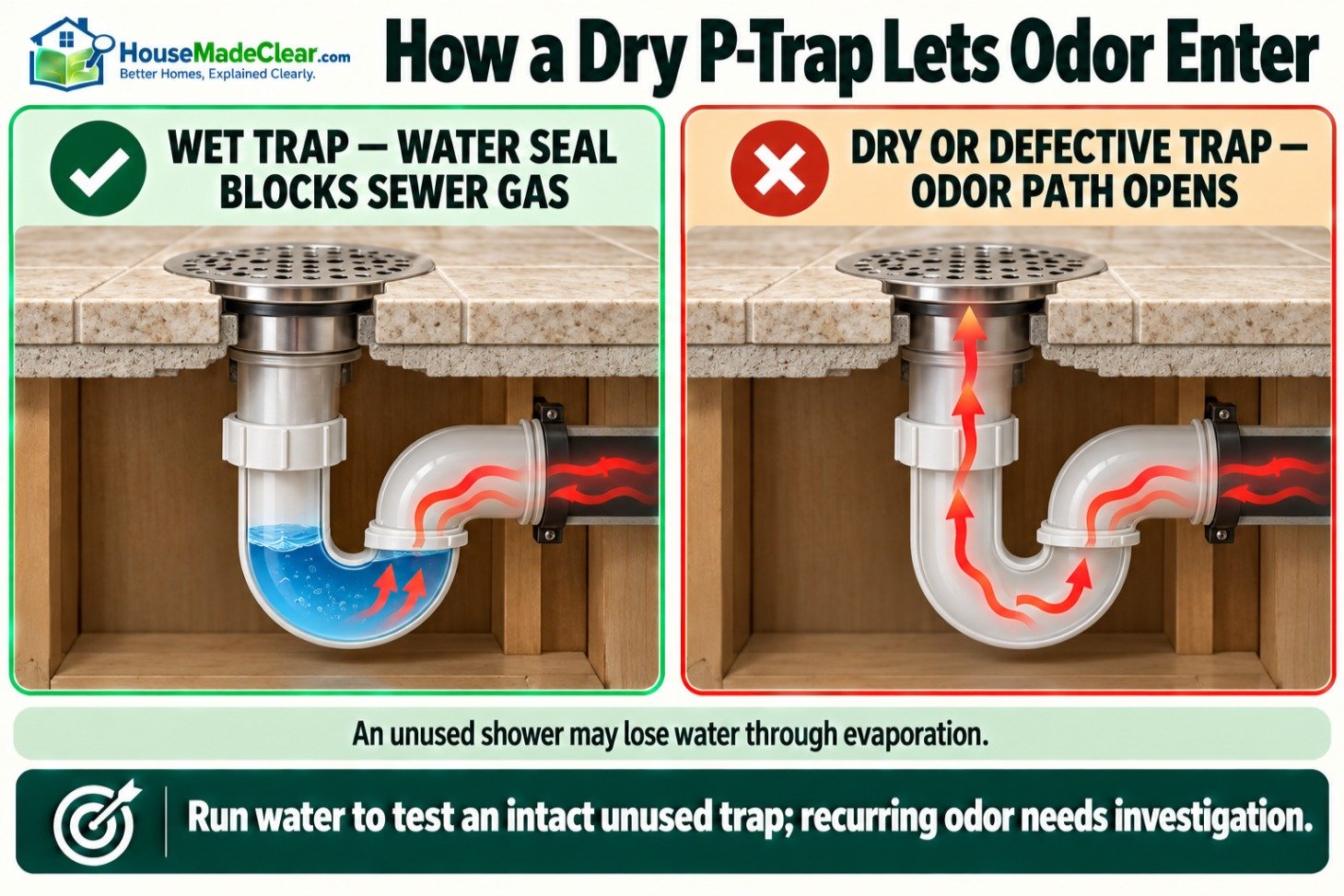
A P-trap is the curved plumbing section designed to hold water and create a barrier between the bathroom and the drainage system.
When the trap retains its water seal, it helps prevent sewer gases from passing into the room.
If the water evaporates or is lost, that protective barrier may no longer work.
The U.S. Environmental Protection Agency explains in its guidance on indoor air quality and sewer-gas barriers that dry drain traps can allow sewer gases to enter buildings. <Cite refs={[“turn605994search1”]}/>
Why Does a Shower P-Trap Dry Out?
A trap can lose water when:
- The shower is unused for an extended period.
- Water evaporates in a warm, dry environment.
- A plumbing defect causes water to leak away.
- A drainage or venting problem contributes to trap-seal loss.
- The trap was installed incorrectly or is missing.
An unused guest bathroom is a common place to notice this problem.
How to Fix a Dry Shower P-Trap
If the shower has been unused for weeks or months and there is no sign of a drain backup:
- Turn on the shower for a short period.
- Let enough water enter the drain to refill the trap.
- Turn off the water.
- Allow the room to ventilate.
- Check whether the smell disappears.
If the odor goes away and does not return during normal use, evaporation may have been the cause.
If the sewer smell persists or quickly returns, the problem may involve a leak, venting issue, or another plumbing defect.
Do not repeatedly add water as a substitute for investigating a defective trap.
How Much Water Should You Pour Down the Drain?
There is no single amount suitable for every shower trap.
The goal is simply to restore the trap’s normal water seal, not to fill the shower pan.
Running the shower briefly is usually a practical way to replenish an intact trap when the drain is functioning properly.
Do not run water into a drain that is backing up or overflowing.
4. A Partially Clogged Shower Drain
A partial blockage can contribute to odor by retaining hair, soap residue, and other organic material.
Water may drain slowly around the obstruction.
The resulting buildup can create an unpleasant smell, particularly when the shower has been unused.
Signs of a Partial Shower Drain Clog
- Water pools around your feet while showering.
- The drain makes unusual sounds.
- The smell becomes stronger after using the shower.
- The drain repeatedly collects hair.
- Water takes noticeably longer to disappear.
How to Fix a Partial Clog
Start at the drain cover and remove accessible hair.
A compatible plastic hair-removal tool may help with shallow obstructions.
If the clog is deeper, a hand-operated drain snake may be appropriate when used by someone familiar with the plumbing configuration.
Do not force a snake through sharp resistance or damage a fixed drain assembly.
If several drains are slow at the same time, the blockage may be farther along a shared pipe.
That situation is better handled through professional plumbing diagnosis.
5. Plumbing Vent Problems or a Lost Trap Seal
Drainage systems use venting arrangements to manage air pressure and allow wastewater to flow properly.
A venting defect, obstruction, or improperly configured drainage system can sometimes contribute to poor drainage and trap-seal problems.
However, gurgling alone does not prove that a vent is blocked.
A partial drain obstruction can produce similar symptoms.
Signs That Need Further Investigation
- The shower drain gurgles when a toilet is flushed.
- The smell returns after the trap has been refilled.
- Several fixtures drain slowly.
- Water levels in nearby traps appear to fluctuate.
- A sewer odor persists despite cleaning.
Can You Fix a Plumbing Vent Yourself?
Vent diagnosis can involve concealed piping and roof-level connections.
It may also require determining whether the problem is an obstruction, a defective connection, or an incorrect plumbing arrangement.
Do not climb onto a roof or insert objects into vent pipes without appropriate training and safety equipment.
A qualified plumber can inspect the system and determine whether venting is actually involved.
6. A Damaged Shower Drain or Leaking Pipe
A persistent smell may come from a defective drain connection, leaking trap, or damaged waste pipe.
Not every leak produces visible water on the bathroom floor.
A leak can occur beneath the shower base or within a floor or wall cavity.
Warning Signs
- An odor that remains even after the drain is cleaned.
- Dampness around the shower enclosure.
- Staining on a ceiling below the bathroom.
- Soft or deteriorating flooring.
- Water appearing outside the shower.
- Repeated mold growth near the base.
- A persistent sewer-like smell.
These symptoms can also have other causes, such as failed waterproofing or leaking supply connections.
The source should be identified before replacing parts.
For homeowners remodeling a shower, proper drain connection and waterproofing coordination are important. Our guide to standard shower pan sizes explains how shower bases, drain positioning, and installation dimensions work together.
What Should You Do?
If you suspect a leak beneath the shower, avoid prolonged use until the condition is assessed.
A plumber or appropriate waterproofing professional may need to inspect the plumbing and shower assembly.
Do not assume a surface application of silicone will repair a concealed drain leak.
7. Mold or Mildew Around the Shower
Sometimes the odor seems to come from the drain but originates from nearby damp materials.
Shower corners, grout joints, door tracks, curtains, and wet surfaces may develop microbial growth if moisture is not controlled.
These conditions often produce a musty odor rather than a distinct sewer-gas smell.
The CDC’s guidance on mold prevention emphasizes fixing water leaks, controlling moisture, and using properly vented bathroom exhaust fans. <Cite refs={[“turn605994search0”]}/>
How to Tell Whether the Smell Is Coming From Mold
Check areas such as:
- Grout and tile joints
- Shower corners
- Door tracks and seals
- Shower curtains and liners
- The area beneath removable accessories
- Adjacent baseboards
- Walls and ceilings with damp spots
Visible discoloration does not always establish that a material is moldy, and hidden mold may not be visible.
A persistent musty odor combined with moisture damage deserves investigation.
How to Clean the Area Safely
For a small amount of growth on an accessible, washable hard surface, use an appropriate detergent and cleaning method.
Wear suitable protection, ventilate the space, and follow product instructions.
Never combine cleaning products.
The CDC’s mold cleanup recommendations specifically warn against mixing bleach with ammonia or other cleansers. <Cite refs={[“turn605994search3”]}/>
If growth is extensive, repeatedly returns, or involves water-damaged porous materials, professional assessment may be appropriate.
To help reduce recurring moisture, see our guide to bathroom humidity after a shower.
8. The Smell Is Coming From the Water, Not the Drain
Not every rotten-egg odor that appears while showering originates in the drain.
Sometimes the incoming water contains sulfur-related odor compounds, or the odor is associated with the hot-water system.
An important diagnostic clue is whether the smell occurs only while the water is running.
How to Check Whether the Water Is the Source
Compare the odor under different conditions:
- Notice whether the shower smells before turning on the water.
- Check whether the odor begins only when the water runs.
- Compare cold and hot water separately.
- Check whether the bathroom sink has a similar odor.
- Determine whether the odor is present at fixtures elsewhere in the home.
If only hot water produces a rotten-egg smell at multiple fixtures, the water-heating system may be involved.
If both hot and cold water smell at several taps, the water supply may need evaluation.
If the smell exists even when no water is running, investigate the drain and surrounding plumbing first.
Do not open or modify a water heater without proper knowledge of the equipment. A qualified plumber or water-treatment professional can help determine the cause.

What Does Your Shower Drain Smell Mean?
Different odor descriptions can help narrow down the initial investigation, although none is a definitive diagnosis.
| Smell | Possible Explanation | Recommended First Check |
|---|---|---|
| Rotten eggs | Sewer gas or sulfur-related water odor | Check whether odor occurs without running water |
| Sewage | Dry trap, defective seal, or plumbing issue | Refill unused trap; monitor recurrence |
| Musty or moldy | Damp materials, surface growth, organic residue | Inspect shower and surrounding surfaces |
| Sour | Hair, soap residue, biofilm | Remove cover and clean |
| Stagnant water | Residue or partial obstruction | Check drainage speed |
| Chemical or solvent-like | Cleaning products or another chemical source | Stop adding products; identify source |
| Strong odor only with hot water | Potential hot-water system issue | Compare hot and cold fixtures |
A strong or persistent sewer-like odor requires more caution than an ordinary dirty-drain smell.
If the odor is widespread or anyone experiences symptoms such as headache, dizziness, nausea, or breathing difficulty, leave the affected area and seek appropriate urgent assistance rather than continuing DIY cleaning.

How to Get Rid of Shower Drain Smell: Step-by-Step
The following sequence begins with straightforward checks and progresses toward plumbing diagnosis.
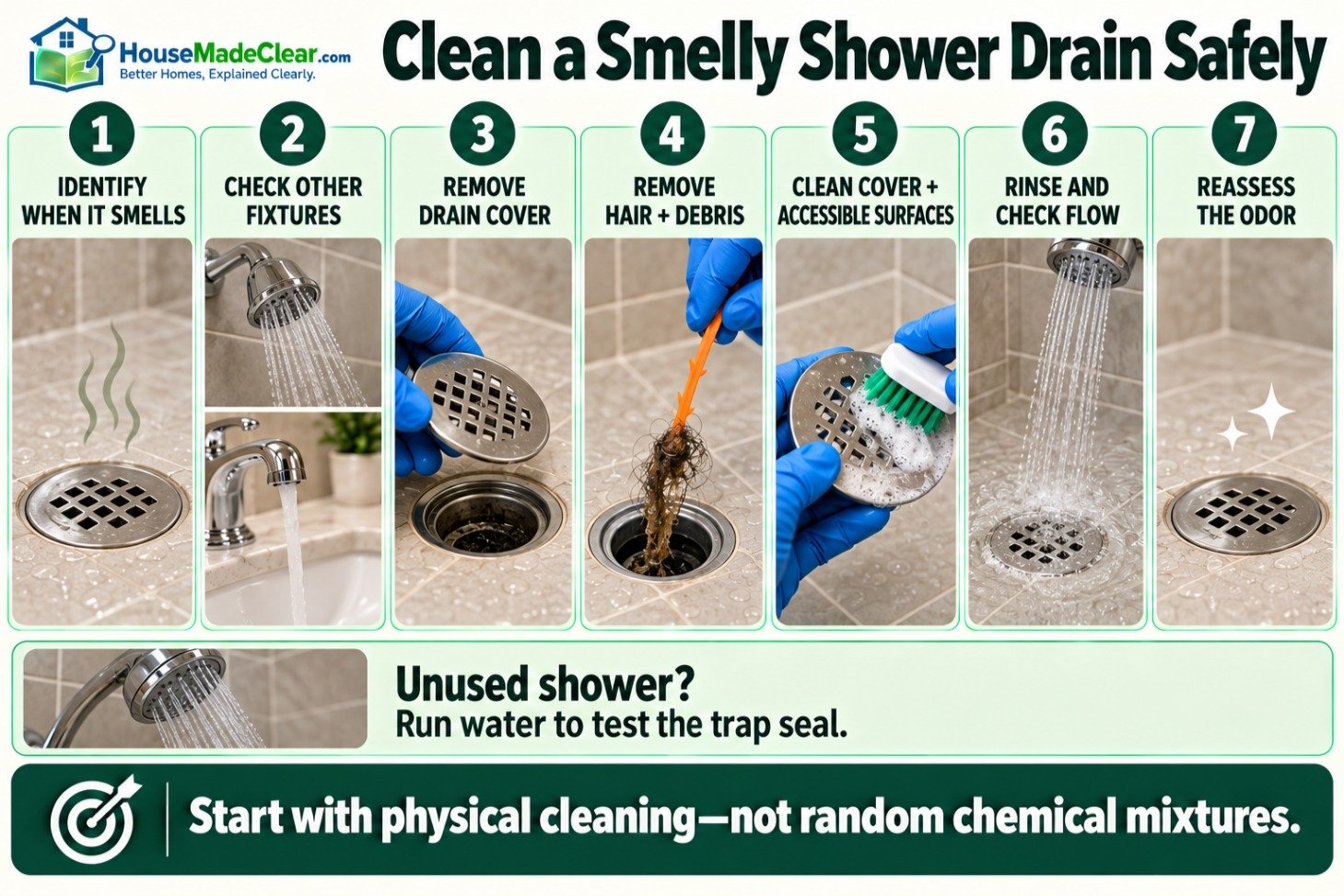
Step 1: Identify When the Smell Appears
Pay attention to whether the odor is strongest:
- Before showering
- During showering
- Immediately afterward
- After several days of nonuse
- When another fixture is draining
This information helps distinguish a dry trap, dirty drain, water odor, and shared plumbing problem.
Step 2: Check Other Bathroom Fixtures
Run a small amount of water at the sink if its drain is functioning normally.
Check whether other drains smell or drain slowly.
If multiple fixtures are affected, avoid assuming that cleaning the shower alone will solve the problem.
Step 3: Remove the Shower Drain Cover
If the cover is removable, follow the manufacturer’s method.
Some covers lift off, while others use screws or locking mechanisms.
Protect the finish and keep small fasteners somewhere safe.
Step 4: Remove Hair and Accessible Debris
Wear gloves.
Use a suitable plastic drain-cleaning tool or another manufacturer-approved method.
Avoid sharp objects and excessive force.
Dispose of debris in the trash rather than washing it back into the drain.
Step 5: Clean the Drain Cover and Accessible Surfaces
Use mild detergent and water.
A small brush can help remove residue from the cover and accessible upper drain surfaces.
Do not pour concentrated cleaners into an unknown blockage.
Step 6: Rinse With Water
If there are no signs of chemical contamination, backup, or serious drainage problems, rinse the cleaned area with water.
Observe whether it flows away normally.
Step 7: Consider a Dry Trap
If the shower has been unused, running water may replenish an evaporated trap seal.
Wait and observe whether the sewer-like smell disappears.
If the odor recurs during normal use, arrange plumbing inspection.
Step 8: Address Bathroom Moisture
Dry wet surfaces and inspect for leaks.
Use an appropriately functioning exhaust fan that vents outdoors.
For fan-use guidance, see how long to run a bathroom fan after a shower.
Step 9: Reassess the Odor
If the drain smells normal after removing buildup, continue with preventive maintenance.
If the odor persists, particularly if it smells like sewage, the source may be beyond the accessible drain opening.
Stop trying random cleaners and have the system inspected.
Should You Use Baking Soda and Vinegar for a Smelly Shower Drain?
Baking soda and vinegar are frequently recommended online as a home remedy for drain odors.
However, their fizzing reaction is not a reliable substitute for removing hair, cleaning accessible surfaces, or repairing a failed plumbing trap.
The mixture does not establish whether the odor originates from biofilm, mold, sewer gas, or the incoming water.
It also cannot correct a damaged waste pipe or failed trap seal.
Mechanical debris removal and targeted diagnosis are better first steps.
Can Baking Soda and Vinegar Damage a Drain?
The more important concern is what may already be inside the drain.
Do not add vinegar, baking soda, or any other substance when chemical drain cleaner or other cleaning products may be present.
Mixing products can create hazardous conditions.
Does Baking Soda Remove Sewer Gas Smells?
It does not repair the underlying route through which sewer gas enters the room.
If a dry trap is the cause, restoring the water seal may help.
If the trap is damaged or repeatedly losing its seal, the plumbing defect needs to be corrected.
Should You Pour Bleach Down a Smelly Shower Drain?
Bleach is not an appropriate default solution for an unexplained drain odor.
It cannot repair a defective trap, leaking connection, or blocked vent.
In addition, adding bleach to a drain containing another chemical product can be dangerous.
Use appropriate cleaning methods on accessible surfaces and follow the product instructions.
If a drain cleaner has already been used, do not add bleach or any other cleaner.
For an unknown sewer-like odor, the priority is identifying whether sewer gases are entering the bathroom.
Can Sewer Gas From a Shower Drain Be Dangerous?
Potentially, yes.
Sewer gas is a mixture of gases that can include hydrogen sulfide and other compounds.
Hydrogen sulfide is known for its rotten-egg odor at some concentrations, but odor is not a reliable way to assess exposure severity.
The EPA identifies hydrogen sulfide as an important odor-producing compound in wastewater systems and notes its potential toxicity in its technical overview of odor and corrosion control. <Cite refs={[“turn605994search4”]}/>
A faint, brief odor is not proof of dangerous exposure. Equally, a strong recurring sewage smell should not be ignored.
What Should You Do if the Sewer Smell Is Strong?
- Leave the affected area if the odor is intense or causes symptoms.
- Do not enter pits, crawlspaces, or other potentially contaminated enclosed spaces to investigate.
- Avoid adding cleaning products.
- Seek urgent help if anyone develops significant symptoms.
- Have the plumbing system evaluated.
If the smell could be natural gas rather than a drain odor, follow your gas utility’s emergency guidance immediately. Do not operate switches, create sparks, or remain inside to investigate.
Why Does My Shower Drain Smell Like Rotten Eggs?
A rotten-egg odor may be associated with sulfur-containing gases, including hydrogen sulfide.
However, it does not necessarily mean the drain itself is defective.
Possible sources include:
- Sewer gas entering through a dry or damaged trap
- Organic buildup in the drain
- Sulfur-related odor in the incoming water
- A hot-water system issue
A useful first question is whether the smell occurs when the shower is completely dry and no water is running.
If the smell only appears with hot water, investigate the water supply and heater.
If it persists when the shower is unused, focus on the trap, drain, and nearby plumbing.
Why Does My Shower Drain Smell Like Sewage After Showering?
A sewage odor that appears or becomes stronger after showering can have several explanations.
Water movement may disturb trapped organic residue, causing odors to become noticeable.
A drainage or venting problem may also change air movement or trap pressure during use.
In some situations, the smell may originate from contaminated areas near the drain rather than from the sewer line.
What Should You Check?
First determine whether the shower drains normally.
If it drains slowly, inspect for a blockage.
If it drains normally but has a persistent sewage odor, a trap or plumbing connection problem becomes more important to investigate.
If the odor occurs alongside gurgling at another fixture, professional plumbing diagnosis is advisable.
Why Does My Shower Drain Smell Even Though It Is Clean?
Cleaning visible tile and removing surface soap scum does not necessarily clean the drain assembly.
Odor may remain because:
- Hair is trapped beneath the cover.
- Biofilm remains on internal surfaces.
- The P-trap is dry or defective.
- A drain connection is leaking.
- Mold is growing in a hidden damp area.
- The incoming water has an odor.
A clean-looking drain is not proof that its internal plumbing is functioning correctly.
If the smell persists after reasonable cleaning, the next step is diagnosis rather than stronger chemical treatment.
Why Does My Guest Bathroom Shower Smell?
Guest bathrooms often go unused for longer periods.
During that time, water can evaporate from drain traps.
If enough water is lost, sewer gases may pass into the room.
When an infrequently used shower develops a sewer smell, running water to restore the water seal is a reasonable first test.
If the smell disappears and stays away with regular use, evaporation is a plausible explanation.
If it quickly returns, consider a leaking trap or another drainage-system problem.
How to Prevent Shower Drain Odors
Preventive maintenance can reduce organic buildup and make problems easier to spot.
Remove Hair Frequently
Use a compatible shower drain hair catcher where practical.
Remove collected hair and dispose of it in the trash.
Clean the Drain Cover
Clean the removable cover as part of routine shower maintenance.
Soap residue and debris can collect underneath it.
Address Slow Drainage Promptly
A slow drain may retain more debris.
Investigate early rather than waiting until water backs up.
Run Water in Infrequently Used Showers
An unused shower may need occasional water flow to keep its trap seal from evaporating.
If recurring evaporation is a concern, ask a plumber whether an appropriate trap-seal maintenance solution is suitable.
Maintain Bathroom Ventilation
Adequate ventilation helps control moisture on surrounding surfaces.
The EPA’s indoor air quality guidance recommends ventilation during showering and keeping indoor relative humidity around 30–50% when practical. <Cite refs={[“turn957263search0”]}/>
Humidity control is useful for bathroom moisture management, but it does not repair sewer-gas leaks or clean a blocked drain.
Repair Leaks
Address leaks and water intrusion promptly.
Moisture-damaged materials can develop persistent odors and other problems.
Avoid Routine Use of Harsh Drain Chemicals
Chemical drain cleaners should not replace basic drain maintenance or plumbing repairs.
Use manufacturer-approved methods and obtain professional help when necessary.
When Should You Call a Plumber for a Smelly Shower Drain?
Contact a qualified plumber if:
- The smell resembles sewage and does not resolve after simple checks.
- The odor returns quickly after replenishing the trap.
- Several drains produce similar odors.
- Multiple fixtures are draining slowly.
- The shower drain gurgles when another fixture is used.
- Water backs up into the shower.
- A leaking trap or damaged pipe is suspected.
- The drain assembly is inaccessible or cannot be safely cleaned.
- The problem continues despite removing accessible debris.
A plumber may inspect the trap, drain connections, venting system, and shared drainage piping.
In more complex cases, specialized diagnostic methods may be appropriate.
When Is the Problem Urgent?
Treat the situation as urgent when wastewater backs up into the home, there is substantial leaking, or an intense gas-like odor is accompanied by physical symptoms.
Stop using affected plumbing fixtures until the issue has been assessed.

Common Mistakes When Fixing a Smelly Shower Drain
Mistake 1: Assuming Every Odor Is Caused by Hair
Hair is common, but sewer-gas problems and water-system odors require different solutions.
Mistake 2: Using Strong Chemicals Before Investigating
Chemicals may not address the actual cause and can create hazards.
Mistake 3: Mixing Multiple Cleaning Products
Never mix drain cleaners, bleach, acids, ammonia, or other cleaning chemicals.
Mistake 4: Ignoring a Dry Trap
A seldom-used shower can develop a sewer smell simply because the water seal has evaporated.
Mistake 5: Cleaning Only the Shower Floor
The drain cover and accessible internal surfaces may still contain buildup.
Mistake 6: Assuming a Normal-Flowing Drain Has No Problem
A drain may flow normally while a defective trap, connection, or surrounding moisture issue causes odor.
Mistake 7: Trying to Repair Concealed Plumbing With Surface Caulk
Caulk cannot reliably repair a leaking drain connection beneath the shower base.
Mistake 8: Ignoring Multiple Affected Fixtures
Symptoms across several drains may indicate a shared plumbing problem.
Mistake 9: Confusing Water Odor With Drain Odor
A rotten-egg smell that occurs only with running hot water may have a different source.
Mistake 10: Covering the Smell With Fragrance
Air fresheners do not remove clogged debris, restore trap seals, or fix plumbing defects.
Shower Drain Odor Troubleshooting Checklist
| What to Check | What It May Tell You |
|---|---|
| Smell present before running water | Investigate trap, drain, and surrounding area |
| Smell appears only with hot water | Check water-heater or hot-water system |
| Visible hair beneath cover | Remove debris |
| Slow drainage | Possible partial clog |
| Shower unused for weeks | Possible evaporated P-trap seal |
| Odor returns soon after running water | Possible ongoing plumbing defect |
| Multiple fixtures affected | Possible shared drainage issue |
| Gurgling during drainage | Obstruction or venting problem |
| Visible moisture damage | Investigate leak |
| Musty grout or door tracks | Investigate surface moisture and microbial growth |
| Strong sewage odor with symptoms | Leave area and seek urgent assistance |
Final Thoughts
A smelly shower drain is often caused by hair, soap residue, or bacterial buildup, but not every odor can be fixed with drain cleaning.
A shower drain that smells like sewage may indicate a dry P-trap, damaged plumbing connection, or another drainage-system problem.
Start with simple checks: identify when the odor appears, remove accessible debris, clean the drain cover, and determine whether the shower drains properly.
If the shower has not been used recently, replenishing the trap water may resolve an evaporation-related smell.
For persistent sewage odors, recurring trap-seal problems, backups, or several affected fixtures, professional plumbing inspection is the appropriate next step.
The most effective solution is the one that addresses the actual cause rather than temporarily covering the odor.
Frequently Asked Questions
Why does my shower drain smell like sewage?
A shower drain may smell like sewage because the P-trap has dried out, a plumbing connection is damaged, or a drainage or venting problem allows sewer gases into the bathroom. Organic buildup may also produce unpleasant odors. Persistent sewer smells should be investigated.
How do I get rid of a bad smell from my shower drain?
Remove the drain cover, clear accessible hair and soap residue, and clean removable components with mild detergent. If the shower has been unused, run water to replenish a potentially dry P-trap. Seek plumbing help if a sewer smell persists.
Why does my shower drain smell like rotten eggs?
A rotten-egg smell may be associated with sulfur-containing gases, including hydrogen sulfide. Possible sources include sewer gas entering through a dry or defective trap, organic buildup, or sulfur-related odors in the water supply.
Can a dry P-trap make a shower smell?
Yes. The P-trap holds water that helps prevent sewer gases from entering the bathroom. If the water evaporates or is lost, gases may escape through the drain. Running water can replenish an intact trap, but repeated water loss needs investigation.
Why does my shower drain smell after I shower?
Showering may disturb residue inside the drain or reveal a drainage-system problem. If the odor appears during water flow, check for slow drainage, organic buildup, and other plumbing symptoms. The water itself may also be the source.
Why does my shower drain smell even after cleaning?
The odor may originate from buildup below the cleaned area, a dry or damaged trap, a leaking drain connection, hidden damp materials, or the incoming water. Cleaning the visible drain cover does not address every possible cause.
Is a smelly shower drain dangerous?
An ordinary dirty-drain smell does not automatically indicate a dangerous condition. However, persistent sewer-gas odors can signal a plumbing defect, and some sewer-gas components can be hazardous at sufficient concentrations. Strong odors or associated symptoms warrant prompt attention.
Can I pour bleach down a smelly shower drain?
Bleach is not a reliable fix for an unexplained drain odor or a defective trap. It can also create dangerous reactions when mixed with other cleaning products. Physical cleaning and identifying the odor source are generally better first steps.
Does baking soda and vinegar remove shower drain smell?
Baking soda and vinegar may produce a fizzing reaction, but they do not reliably remove dense hair buildup, repair a dry P-trap, or correct a sewer-gas leak. Do not add them to a drain that may contain another cleaning chemical.
How do I know if my shower P-trap is dry?
A sewer-like smell after a shower has been unused for a long period is a possible clue. If the odor disappears after running water, an evaporated trap seal may have been responsible. If it persists or quickly returns, arrange further inspection.
Why does my guest bathroom shower drain smell?
A guest shower may sit unused long enough for water in the P-trap to evaporate. This can allow sewer odors into the bathroom. Running water may restore the seal if the trap is intact, but recurring odor requires investigation.
Can mold cause a shower drain to smell?
Mold and other microbial growth on damp bathroom surfaces can create musty odors that appear to come from the drain. Check the shower enclosure, grout, door tracks, and nearby materials for persistent moisture and visible growth.
Why does my shower drain smell but drain normally?
A drain can flow normally while a dry trap, defective connection, internal residue, or nearby moisture problem produces an odor. Normal drainage does not rule out every plumbing issue.
Why does my shower drain smell only when the water runs?
Running water can disturb organic residue or change airflow within the drainage system. If the smell is specifically associated with hot water, the water heater or incoming water may be involved. Compare hot and cold water at other fixtures.
When should I call a plumber for a smelly shower drain?
Call a plumber if a sewer smell persists, returns quickly after the trap is refilled, or occurs with gurgling, slow drains, wastewater backups, or suspected leaks. Multiple affected fixtures are another reason to seek professional diagnosis.







[…] Why Does My Shower Drain Smell? 8 Causes and How to… […]
[…] Why Does My Shower Drain Smell? 8 Causes and How to… […]
[…] Why Does My Shower Drain Smell? 8 Causes and How to… […]