


















Start with the pile that gets in your way. If it sits beside your bed, a nightstand cubby may be enough. If books cover the dining table because the family reads there, clearing one shelf in the sideboard could solve the problem without buying furniture.
Quick Answer
Keep the books you browse together in one visible row. A low bookcase or an existing cabinet shelf works well. Give current reads a place beside your favorite seat. Use shallow under-bed boxes for books you rarely open. Before buying storage, measure the books side by side and compare that width with the usable space inside the furniture.
Which book storage idea suits your space?
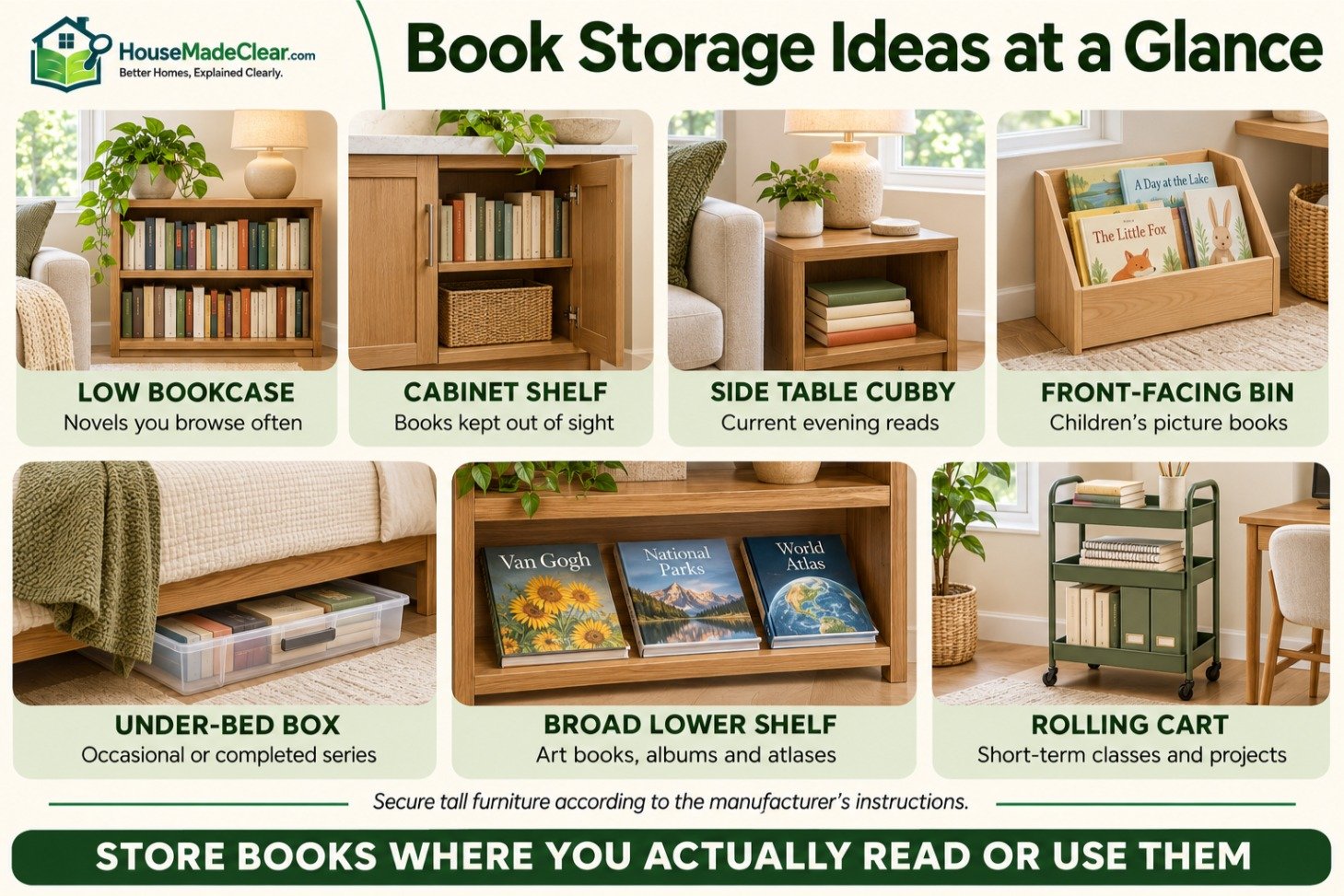
| What you need to store | Where to put it | What to check first |
|---|---|---|
| A collection of novels you browse often | Low bookcase in the living room | Can you see the titles and reach the bottom row? |
| Books you prefer to keep out of sight | Shelf inside a cabinet or sideboard | Does the door open wide enough to remove a hardcover? |
| A few books you read every evening | Side table or nightstand cubby | Can you pick up a book without moving the lamp? |
| Picture books for a young child | Low, front-facing book bin | Can the child flip through the covers and put one back? |
| A completed series you want to keep | Shallow box beneath the bed | Can you pull the loaded box all the way out? |
| Art books, albums or atlases | Broad lower shelf | Does the entire cover fit on the shelf? |
| Books for a class or short-term project | Small cart or a dedicated office shelf | Can you take the books to where you work? |
How much space do your books need?
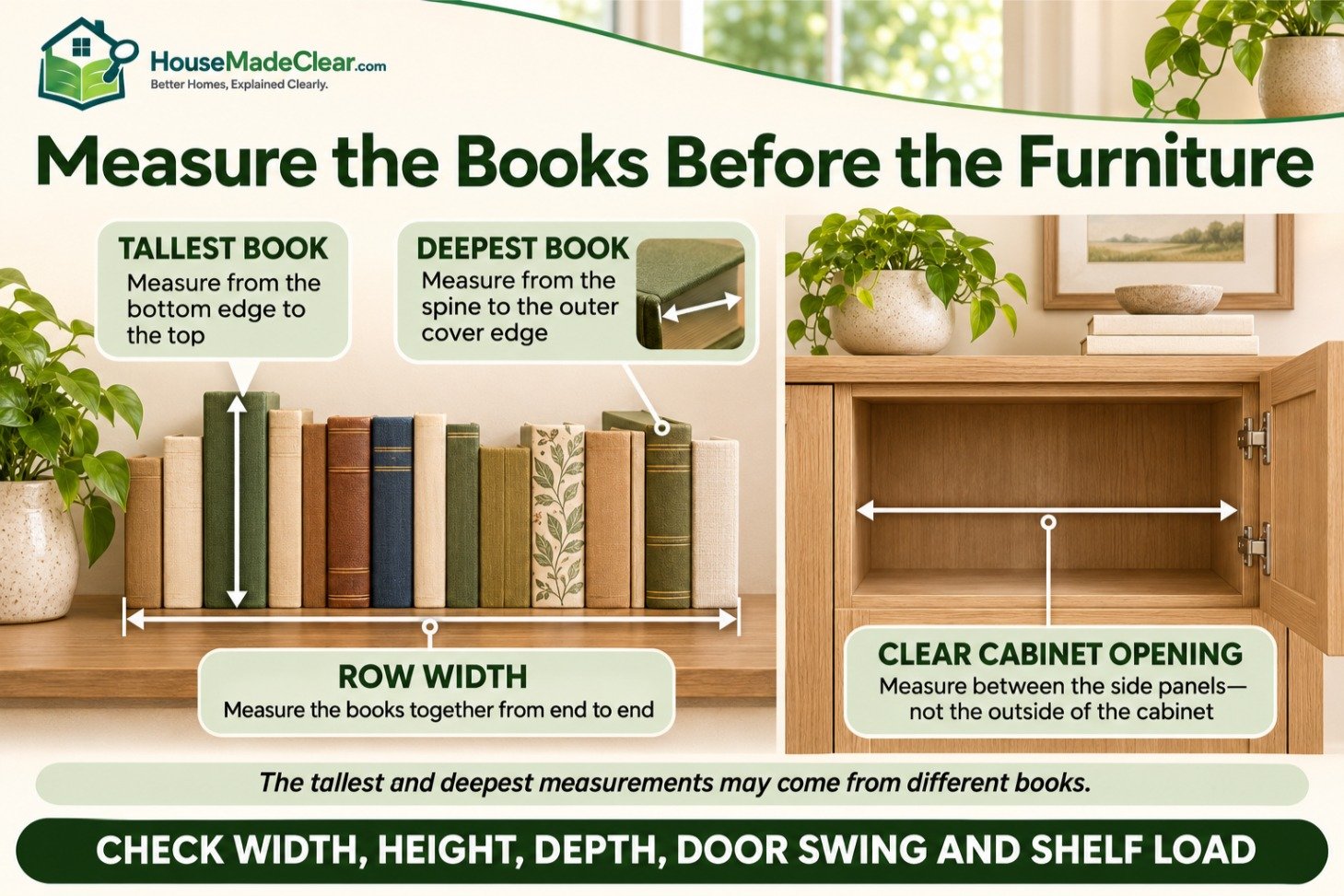
Stand the books together as they would sit on a shelf. Measure the row from end to end. If your collection is large, measure one group at a time and add the results.
Then pick up the tallest book and the deepest one. They may be different books. Measure the first from top to bottom. Measure the second from the spine to the outer edge of the cover. These three figures tell you how much shelf width, height and depth your collection needs.
A shelf-space example
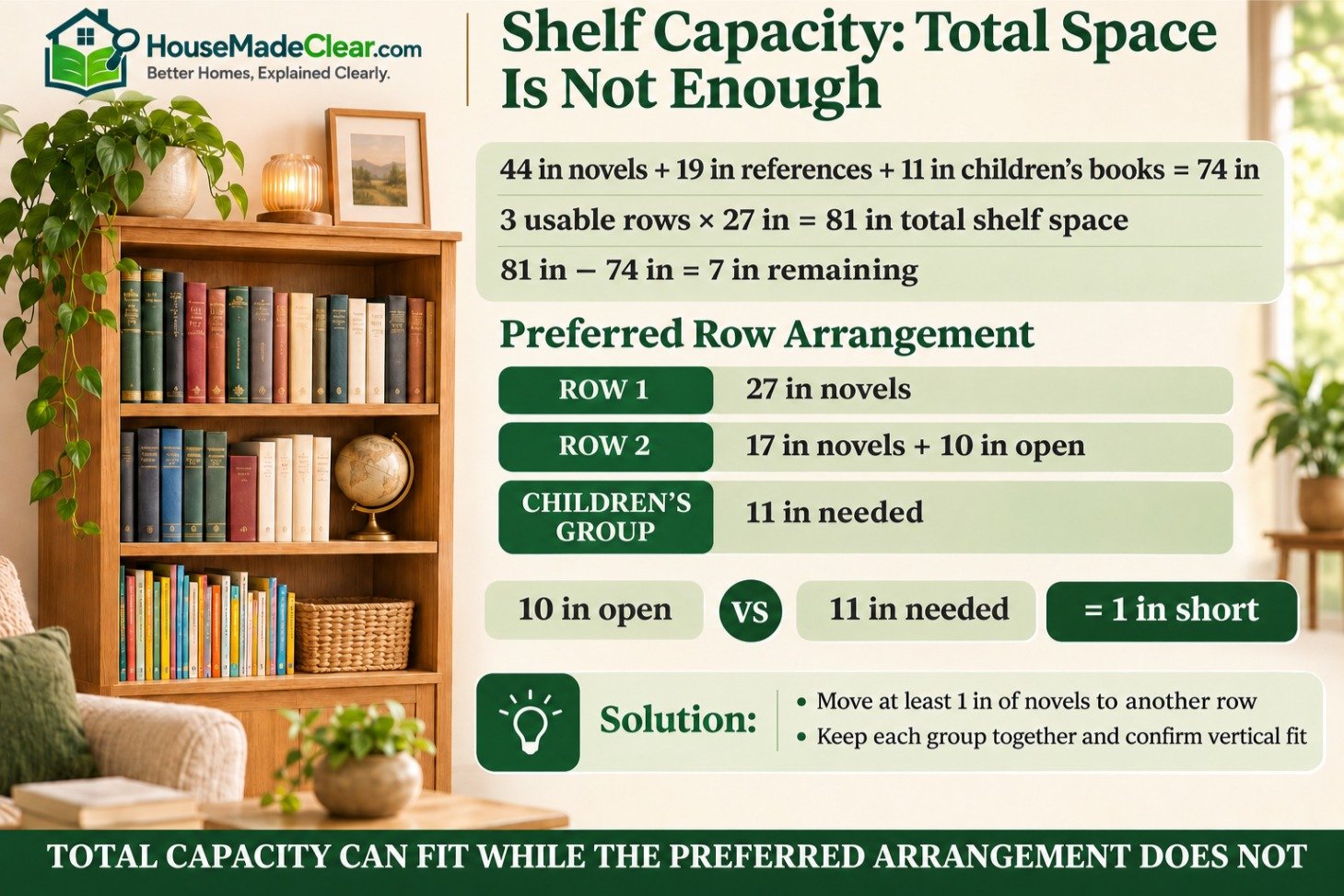
Suppose your books take up the following space when arranged in rows.
| Book group | Width of the row |
|---|---|
| Novels | 44 inches |
| Reference books | 19 inches |
| Children’s books | 11 inches |
| Total | 74 inches |
A bookcase with three usable rows of 27 inches gives you 81 inches of shelf space. That leaves 7 inches across the unit for bookends, handling room and future books.
Now try assigning the books to rows. The novels could fill the first 27-inch row and occupy 17 inches of the second. That leaves 10 inches on the second row. The 11-inch children’s collection won’t fit there as a group. Moving just one novel to the third row solves the width problem, provided the books also fit vertically.
This small exercise is worth doing if you like to keep a series together. A total width can look generous even when the arrangement you want falls one inch short.
What to measure inside a cabinet
Use the clear opening between the side panels. A cabinet sold as 30 inches wide may have thick sides, a center divider or hinges that use some of that space.
Try the largest book with the door open. Can you lift it slightly and bring it straight out? If you have to bend the cover around a hinge, that compartment is a better home for smaller books.
Check the shelf’s weight rating as well. A row of large hardcovers can fit the opening and still be too heavy for the shelf. If you are unsure of the weight, weigh a manageable group on a household scale. Use that figure to estimate the load on each shelf.
Book storage ideas for living rooms
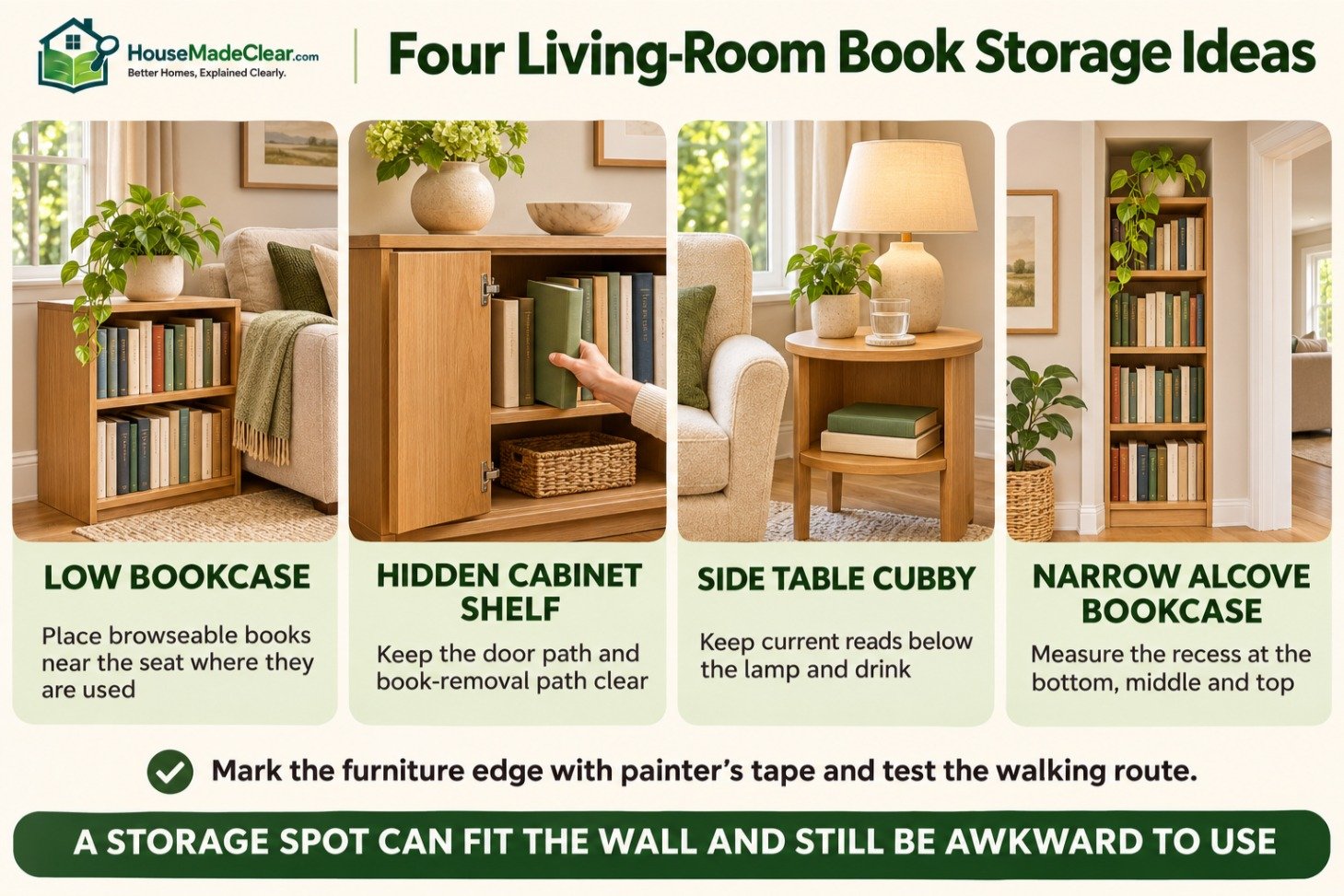
1. Use a low bookcase beside the sofa
A low bookcase is a good home for books that several people browse. Place it near the seat where someone is likely to open a book. An end wall beside the sofa often gives better access than the strip of wall behind an armchair.
Choose the shelf arrangement around the collection. A family that reads mostly paperbacks can use several similar rows. If you own graphic novels or large hardcovers, an adjustable unit lets you give one row extra height. Take your tallest volume along when comparing furniture in person.
Before placing the unit, mark its front edge on the floor with painter’s tape. Walk past with a laundry basket. Sit down, then reach toward the proposed bottom shelf. A bookcase can fit the wall and still be awkward to use from the room. If several doors open into the space, start with the walking routes in this living room layout guide.
Once the bookcase is in place, try one shelf before filling the others. Put a favorite series at a comfortable browsing height. Live with it for an evening. You may find that the shelf you thought was ideal disappears behind the arm of the sofa.
A sideboard, media cabinet or dining cabinet can hold a surprising number of books once you clear one full shelf. This works particularly well in a living room where you want to close the doors after reading.
Choose a compartment that opens toward the reader. Cabinet doors beside a sofa arm sometimes open only partway. In that case, reserve the far end for books you rarely use. Give the easy-to-reach end to the titles you pull out most often.
Stand the books in one row with their spines facing outward. A bookend will support a short row and leave room for another title. Keep the space immediately in front clear. Even a small decorative bowl becomes annoying when you have to move it every time you want a book.
A simple household label can help with shared storage. “Travel guides in the dining cabinet” is easy to remember. If the family has to open four doors to find a guide, bring the whole group together behind one door.
3. Keep current reads on the lower shelf of a side table
A side table can serve two purposes. The top holds a lamp and a drink. The open shelf below holds the novel you are reading, the next book in the series or a magazine you dip into on weekends.
Sit in your usual chair and check which end of the shelf you can reach. Turn the spines toward that end. A book placed neatly against the back wall can disappear beneath a wide tabletop, especially in the evening.
For a shared reading corner, give each reader a small section. That prevents one person’s bookmark from getting dislodged whenever someone sorts through a pile. It also makes it obvious which books are still in use.
This arrangement is especially useful for library books. Keep the books you are reading near the chair. Once a book is finished, move it to the bag you take to the library. A borrowed book is easy to forget once its spine blends into a shelf of books you own.
4. Give an alcove a narrow bookcase
Measure a recess at the bottom, middle and top before buying a unit. Baseboards can narrow the opening near the floor. An uneven wall can leave less room at shoulder height. Use the smallest clear width when comparing options.
Think about where the book spines will sit. In a deep alcove, a shallow bookcase pushed against the back can leave the bottom rows hidden in shadow. Bringing it forward may make the books easier to browse. Follow the furniture instructions for positioning and anchoring.
If you rent, check the anchoring requirements before buying a tall unit. Where the required installation is unavailable, an existing secured cabinet may give you a better place for the collection.
For a recess that can hold only a small display, choose a handful of books you enjoy seeing. A wall shelf can work there while the main collection stays together elsewhere. For that option, see floating bookshelf sizes, spacing and placement.
Bedroom book storage ideas
5. Make the nightstand your bedtime reading spot
A nightstand works best when it holds the books you are actually reading in bed. Leave one on top if you reach for it every night. An open cubby underneath can hold the next title without crowding your glasses, phone or reading light.
If your nightstand has a drawer, try opening it from bed with a book inside. A deep hardcover may fit when the drawer is empty but catch beneath the top once it rests on another book. Paperbacks usually give you more flexibility.
For two readers sharing a room, the storage can be different on each side. One person may need room for several books. The other may want only a lamp and enough space for a glass of water. Matching nightstands are optional, and you can often solve the reading problem with furniture you already own.
If you do need a different table, measure the gap beside the bed and the height of the mattress first. This nightstand dimensions guide covers the measurements that affect bedside reach.

6. Store occasional reads in shallow under-bed boxes
Under-bed boxes suit a completed series, seasonal children’s books or course books you want to keep. Choose books you can identify from a label. If your pleasure comes from scanning the spines to decide what to read, give those books a visible shelf.
Measure three things before choosing a box.
- Clear height. Measure from the floor to the lowest part of the bed frame. Include the box lid and wheels.
- Clear width. Look for center legs or braces that divide the space beneath the bed.
- Pull-out space. Measure how far the box can come into the room before it hits a wall, rug or nightstand.
A bed with 8 inches of clearance can still be a poor fit for a box just under 8 inches tall. The lid may bow slightly when loaded. A thick rug beside the bed can raise the box as you pull it out. Test one container before buying a matching set.
Label the end that faces the room. “Mystery series, volumes 1–9” is more helpful than “books.” Two short boxes may also be easier to move than one long box packed with hardcovers.
If under-bed space already holds most of your clothes, give those items priority. An occasional book collection may fit better in a living-room cabinet. This becomes especially important when planning storage for a small bedroom without a closet.
Book storage for children, work and hobbies
7. Use a low book bin for children’s picture books
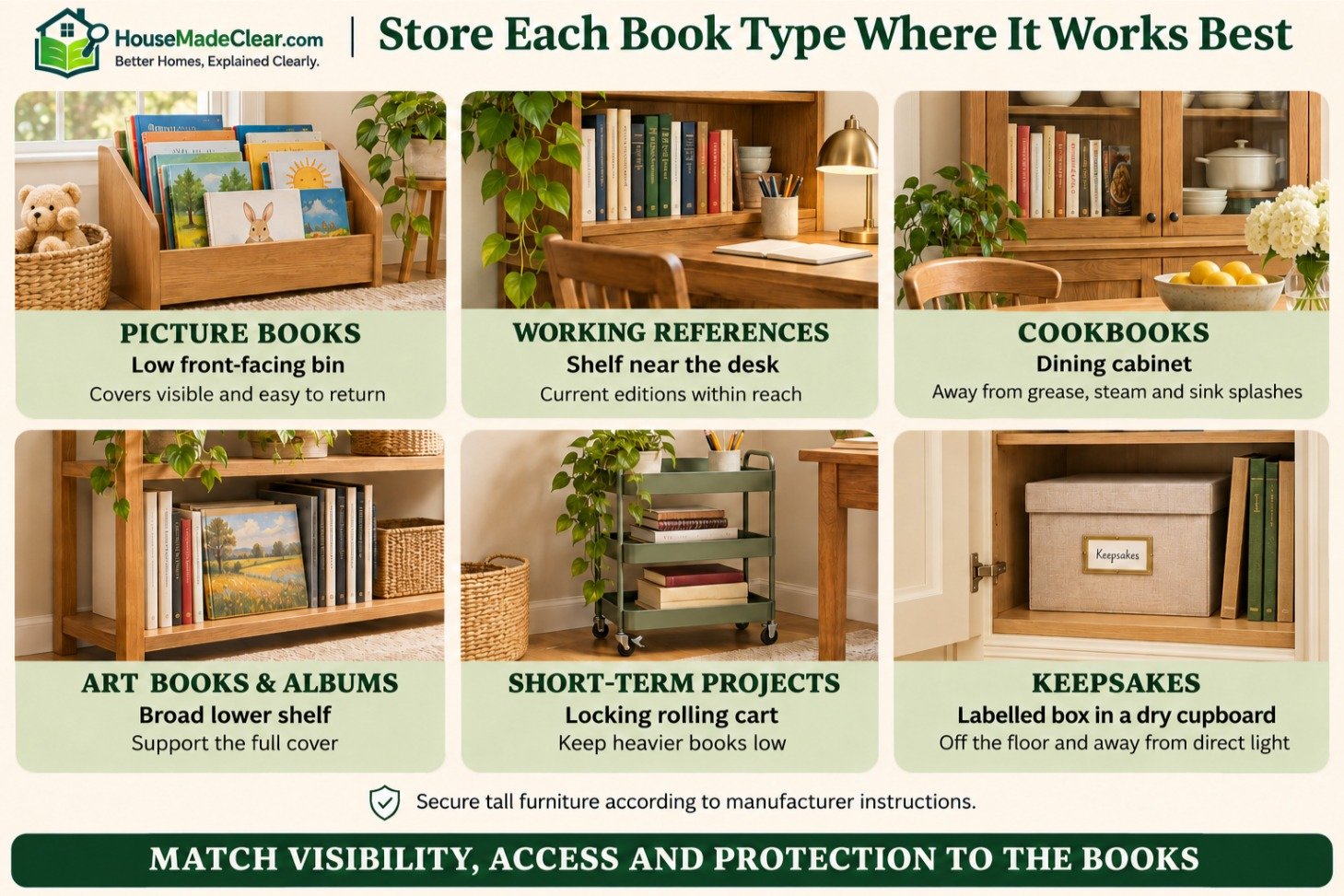
Young children often recognize a favorite cover before they can read the spine. A front-facing bin lets them flip through the books and choose one independently. It also gives them an easy place to return the book when story time ends.
Test the bin with your widest picture book and your smallest board book. The wide cover should fit without bending. Enough of the small cover should show above the rim for a child to recognize it. If the sizes differ greatly, a separate small basket for board books can help.
Leave enough room for the covers to turn. An overfilled bin behaves like a tightly packed file drawer. A child has to pull several books onto the floor just to see the one behind them.
For a larger collection, keep a few familiar titles in the bin and rotate others when interest changes. Put the child’s favorites within easy reach. Secure bookcases and other heavy furniture according to the manufacturer’s instructions. The U.S. Consumer Product Safety Commission’s Anchor It guide explains how anchoring helps prevent furniture tip-overs.
8. Give working references one shelf near the desk
Which book did you last open while you were working? That title deserves a spot near the desk. A dictionary, design manual or current course book earns its place each time you can check something and go straight back to the task.
Give active project books one end of a shelf. Place a bookend beside them so the row stays upright when a volume is on the desk. Old training manuals and completed courses can go in a separate compartment.
If you have several editions of the same title, make the current edition easy to identify. A small label on the shelf edge works well. Keep an older edition only if you still have a reason to consult it.
For a dining-table workspace, dedicate one shelf in a nearby cabinet to books and a project notebook. When work ends, they go back together. The dining table clears in one trip. You can apply the same approach to paperwork and supplies with these home office organization ideas.
9. Store cookbooks near the dining table
A dining-room sideboard is often a better place for cookbooks than the counter beside the stove. You can browse recipes while planning meals, and the books stay clear of grease, steam and sink splashes.
Start with the books you use on ordinary weekdays. Place those near the front of the cabinet. A large baking reference can occupy a broader lower shelf. Holiday titles can share a less accessible compartment until their season arrives.
If you cook from handwritten family recipes, give them their own folder or box beside the cookbooks. Loose sheets tucked into several different volumes are hard to find when someone else wants to make the dish.
In a small kitchen, open the book at the dining table to choose the recipe. Bring it to a clean, dry spot when you need the instructions. That leaves more of the counter free for ingredients. It also gives a wide cookbook enough room to lie open without leaning against a hot appliance.
10. Use a broad lower shelf for art books and albums
One large atlas or photography book can force an entire adjustable shelf upward. Before you sacrifice the row above, see whether that volume fits flat on a broad lower shelf. Then you can keep the tighter shelf spacing that suits the rest of your books.
Support the full cover. Look at the outer corners as well as the spine. If the corners hang over the shelf, try a deeper cabinet or a different orientation.
Keep flat stacks short. Place larger volumes underneath smaller ones. A useful test is whether you can take out the bottom book without needing another table to hold everything above it. A family album that nobody can retrieve comfortably will rarely get opened.
A coffee table works for one book people enjoy browsing. Try leaving it there for a week. If someone opens it while sitting on the sofa, the spot serves a purpose. If it spends the week supporting remotes and coasters, move it to the lower shelf and reclaim the tabletop.
11. Put a short-term collection on a rolling cart
A rolling cart makes sense when the books regularly move with you. A child may study at the dining table and read in the living room. Two adults may share a set of gardening books while planning the garden indoors and checking notes near the patio.
Pick a parking spot before choosing the cart. Measure the space including handles. Check the narrowest doorway and any rug edge along the route. A cart that rolls easily when empty can become awkward once the bottom tier holds several hardcovers.
Choose a cart rated for the load. Keep heavier books low and use wheel locks where provided. Leave doors and walking routes clear when you park it.
A cart is particularly useful for a project with a finish date. For a six-week course, keep the reading list, notebook and current texts together. When the course ends, return the books to their usual shelves. The cart becomes available for the next project without creating another permanent place to search.
12. Give keepsake books a labeled box in a dry cupboard
A school prize, an inscribed first edition or a grandparent’s recipe book may matter more than a whole shelf of replaceable titles. Give it a place where you can find it and check its condition.
Use a clean cupboard in a room with fairly stable conditions. Keep the box off the floor and away from possible leaks. A windowsill with strong afternoon sun and a basement that smells damp are poor choices. The Library of Congress guide to preserving books recommends a cool, relatively dry space and protection from direct light.
Label the box with names a family member will recognize. “Mum’s school prizes and poetry books” says more than “old books.” A note inside can record who owned a copy or why the inscription matters. You can save that history without writing on the original cover.
For a fragile cookbook that the family still uses, keep a copy of the favorite recipe in the kitchen. The original stays protected, and nobody has to handle delicate pages with wet hands to check an oven temperature.
How to organize a collection that spans more than one room
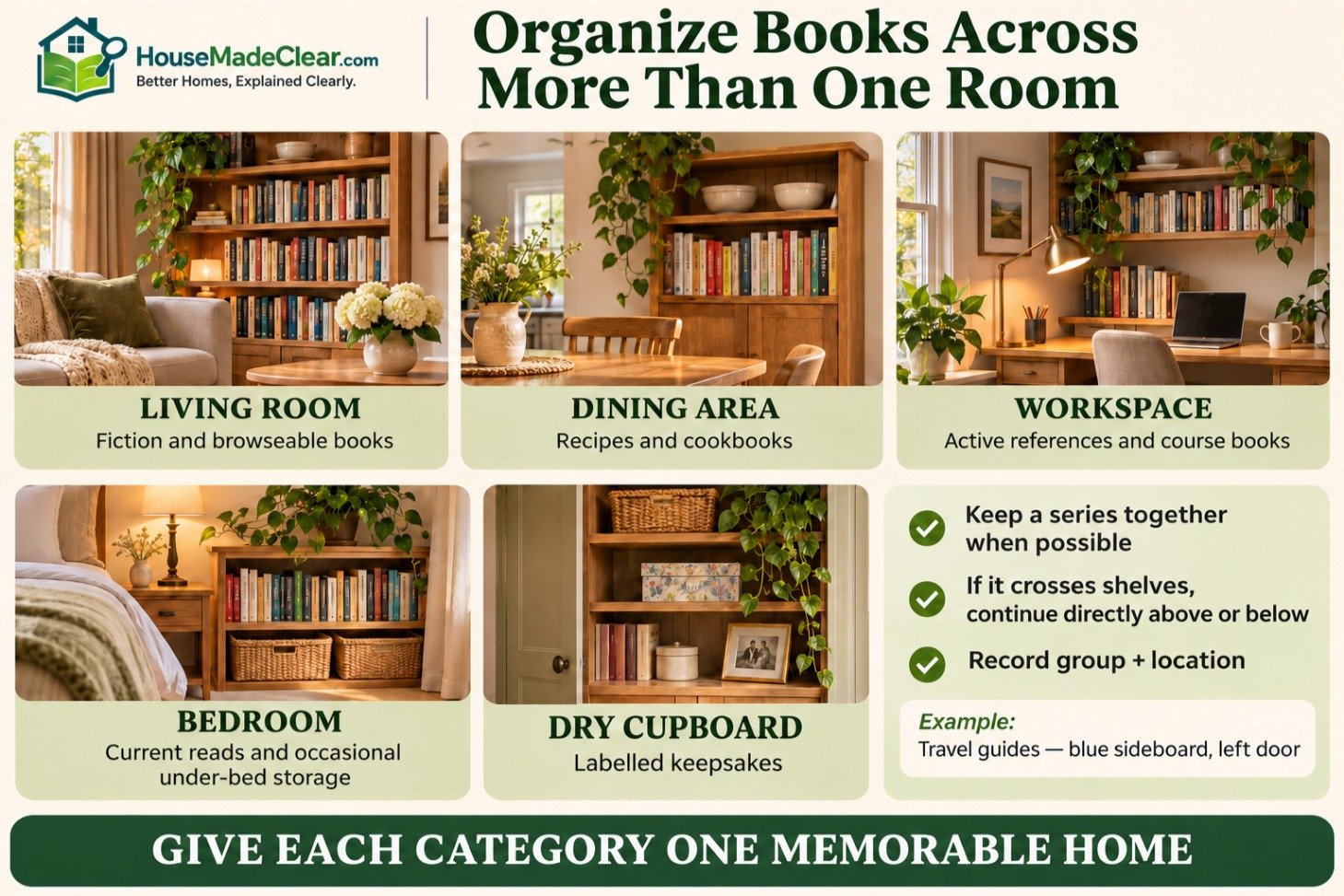
Give each room a category that people can remember. Fiction in the living room, recipes in the dining cabinet and working references beside the desk are easy to explain. Problems begin when half a series is under the bed and the rest is spread across two different cabinets.
For a shared collection, ask each reader how they look for a book. Someone who reads detective novels may remember the series and its reading order. Someone choosing a gardening book may remember its subject. Both methods can work in the same home.
Keep a series together when possible. If it has to cross two shelves, continue it directly above or below the first row. Leave the newest volume at the open end. The next book then has an obvious destination when it comes home.
A basic list helps when closed storage spreads across several rooms. Record the group and location, such as “travel guides — blue sideboard, left door.” You only need a title-by-title inventory if individual titles are otherwise hard to find.
What if the shelves are already full?
First, find out how much space you are short. An extra 12 inches for one series calls for a different solution from six feet of books still in moving boxes.
Take out borrowed books that are ready to return. Move oversized volumes that each occupy an opening far taller than the books beside them. Then check whether changing the height of an adjustable shelf creates space for another usable row.
If you still need more capacity, compare the two spaces you could realistically use. For example, an empty 22-inch cabinet shelf may hold the series that is creating the overflow. A new bookcase becomes more useful when several categories are growing and you want to browse them together.
Deep shelves sometimes allow a second row. Use the back for a complete group you rarely browse. A card inside the cabinet door can remind you what is there. Keep everyday favorites in the front row so choosing tonight’s book stays easy.
Frequently asked questions
How can I store books without a bookshelf?
Clear one shelf in an existing sideboard, cabinet or bedside table. Use it for the books you read most. A labeled under-bed box can hold the occasional titles that would crowd the shelf.
Should books be stored upright or flat?
Keep ordinary books upright with nearby books or a bookend for support. Large or awkward volumes can lie flat when their covers fit fully on the surface. Keep the stack shallow enough to lift out the lowest book.
What is the best way to store books in a studio apartment?
Choose one main spot for the collection and one small spot for your current read. A living-area cabinet and a bedside cubby can cover both needs without taking up another stretch of wall.
How can I organize books on a tight budget?
Start with an afternoon and a tape measure. Empty one suitable shelf, group the books you want there and try the arrangement. Once you know what still lacks a home, you can decide whether a bookend, a small box or more furniture would actually help.







[…] 12 Book Storage Ideas for Small Spaces, With or Without a… […]
[…] 12 Book Storage Ideas for Small Spaces, With or Without a… […]
[…] 12 Book Storage Ideas for Small Spaces, With or Without a… […]