
















A porch can look attractive in photographs and still be uncomfortable or inconvenient to use.
Furniture may block the front door. Afternoon sun may make the seating area too hot. An outdoor rug may remain wet after rain. Tall plants may reduce visibility around the entrance, while decorative lights may create glare instead of useful illumination.
A successful summer porch should therefore begin with function rather than decoration.
Before buying cushions, planters or string lights, consider:
- How people enter and leave the home
- How much floor space is genuinely available
- When direct sunlight reaches the porch
- Whether rain enters the covered area
- How air moves through the space
- Where lighting and electrical connections are located
- How much maintenance the materials require
- Whether furniture or plants affect entrance visibility
Quick answer:
Measure the porch, protect the route to the door and decide how the space will be used. Then address shade, seating, weather-resistant materials and lighting before adding plants or seasonal decoration. A practical porch should remain comfortable, easy to maintain and safe to move through throughout the summer.
Start by Assessing the Porch
Do not begin with furniture shopping.
Stand on the porch at different times of day and observe how the space actually behaves.
Check:
- Porch width and depth
- Door width and opening direction
- Steps and railings
- Main walking route
- Roof coverage
- Morning and afternoon sunlight
- Wind direction
- Rain exposure
- Drainage
- Electrical outlets
- Existing wall lights
- Privacy from the street or neighbouring properties
- Visibility from inside the home
- Package-delivery area
A porch that appears fully covered may still receive wind-driven rain. A shaded porch in the morning may become extremely bright and warm in the late afternoon.
Photograph the Space
Take photographs from:
- The street or front path
- The entrance steps
- The doorway
- Each corner of the porch
- Inside the home looking outward
These views can reveal:
- Furniture that would crowd the entrance
- Empty areas that could support seating
- Locations where plants may block visibility
- Unbalanced lighting
- An unattractive or overly exposed view
- Areas that need privacy
Identify the Porch Type
The best layout depends partly on the porch structure.
Common types include:
- Small entrance stoop
- Narrow front porch
- Deep covered porch
- Screened porch
- Wraparound porch
- Rear porch
- Apartment balcony-style porch
- Open veranda
A small entrance platform should not be treated like an outdoor living room. It may need only a clear doorway, one planter and practical lighting.
Decide How You Want to Use the Porch
A porch becomes easier to plan when it has a defined purpose.
Possible uses include:
- Morning coffee
- Reading
- Informal conversation
- Watching children outside
- Outdoor dining
- Evening relaxation
- Receiving visitors
- Package delivery
- Seasonal entrance styling
- Gardening
- Removing shoes before entering
Choose One Primary Purpose
Trying to fit dining, lounging, storage, gardening and entertaining into a small porch will usually create clutter.
Rank the intended uses as:
- Essential
- Regular
- Occasional
For example:
| Activity | Priority |
|---|---|
| Clear access to the front door | Essential |
| Seating for two people | Regular |
| Package-delivery space | Regular |
| Dining for four people | Occasional |
| Plant display | Occasional |
The essential functions should control the layout.
Measure Before Buying Furniture
Measure the porch’s:
- Total width
- Total depth
- Usable covered area
- Door width
- Door swing
- Step width
- Railing height
- Distance between columns
- Available wall space
- Clearance around outlets and lights
Measure proposed furniture as well, including:
- Chair width and depth
- Space needed to pull out a chair
- Table diameter
- Bench depth
- Reclining clearance
- Storage-lid opening
- Furniture-cover dimensions
Mark the Furniture Footprint
Use painter’s tape, cardboard or newspaper to mark the proposed dimensions on the floor.
Then test whether you can:
- Open the door completely
- Walk around the furniture
- Carry shopping bags inside
- Receive a package
- Reach the steps safely
- Access railings
- Clean behind the furniture
A chair that fits on paper may still feel too deep when someone is sitting in it.
Protect the Main Walkway
The route from the steps or path to the front door should remain obvious and unobstructed.
Avoid placing:
- Chairs directly in front of the door
- Planters on narrow steps
- Rugs with curled edges
- Small tables in the walking route
- Cables across the floor
- Decorative objects beside the threshold
- Storage boxes where visitors naturally stand
If the porch also functions as an emergency exit, access should never depend on moving furniture first.
Check the Door Swing
An outward-opening door, screen door or storm door may require more clearance than expected.
Test the complete movement of:
- Main door
- Screen door
- Storage bench
- Cabinet door
- Folding table
- Reclining chair
The layout must work when every moving element is open—not only when everything is closed.
Choose Furniture That Matches the Porch
The amount and type of furniture should follow the porch’s dimensions and purpose.
Small Entrance or Stoop
A small entrance may need only:
- One compact chair
- Narrow bench
- Small wall-mounted shelf
- One planter
- Suitable doormat
- Clear lighting
Do not force a complete seating group onto an entrance that primarily functions as a passage.
Narrow Porch
Suitable options may include:
- Shallow bench
- Two compact chairs
- Small round table
- Folding chairs
- Nesting tables
- Wall-mounted drop-leaf table where appropriate
Arrange furniture along one side while keeping the walking route clear.
Deep Covered Porch
A deeper porch may support:
- Conversation seating
- Outdoor sofa
- Coffee table
- Rug
- Reading corner
- Dining area
Use furniture to create one clear zone rather than distributing unrelated pieces around the perimeter.
Screened Porch
A screened porch may offer greater protection from insects and weather, but it still needs:
- Ventilation
- Outdoor-appropriate materials
- Clear exits
- Suitable lighting
- Regular screen inspection
Do not assume screened space should be furnished with standard indoor furniture. Humidity and temperature changes can still damage unsuitable materials.
Wraparound Porch
A wraparound porch can be divided into separate zones, such as:
- Entrance area
- Conversation area
- Dining area
- Quiet reading corner
Keep the zones visually connected through related materials, colours or planters.
Select Comfortable, Weather-Suitable Seating
Outdoor furniture should suit the porch’s actual exposure.
Consider:
- Direct sunlight
- Humidity
- Rain
- Salt air
- Wind
- Temperature changes
- Storage during winter
- Cleaning requirements
Materials commonly used outdoors include:
- Powder-coated metal
- Outdoor-rated wicker
- Suitable treated timber
- Teak
- Weather-resistant resin
- Exterior-grade fabrics
No material is maintenance-free. Follow the manufacturer’s care instructions and check fasteners, frames and surfaces periodically.
Test Comfort Before Appearance
A chair may look elegant but provide poor support.
When possible, test:
- Seat height
- Seat depth
- Back angle
- Arm position
- Ease of standing up
- Cushion firmness
A porch used for long conversations needs more comfort than an entrance used only briefly.
Check Current Product Recalls
Outdoor furniture can be subject to recalls for structural or collapse hazards. For example, the US Consumer Product Safety Commission issued a January 2026 recall involving certain Adirondack-style patio chairs that could crack and collapse. Check model information and current recall databases when buying unfamiliar, second-hand or older outdoor furniture.
Address Shade Before Adding Decoration
A beautifully styled porch will remain unused if direct sun makes it uncomfortable.
Observe the space during the hours when you expect to use it.
Potential shade options include:
- Existing porch roof
- Outdoor roller shade
- Retractable awning
- Suitable outdoor curtain
- Freestanding umbrella
- Trellis
- Carefully positioned planting
- Exterior shutters where appropriate
Do Not Block Ventilation
Privacy and shade treatments should still allow air to move through the porch.
A fully enclosed curtain arrangement may:
- Trap warm air
- Move dangerously in strong wind
- Block the entrance
- Reduce visibility
- collect moisture
Secure loose fabric according to the product instructions.
Consider Low-Angle Sun
A roof may block overhead midday sun but not morning or evening sunlight entering from the side.
Side shades or adjustable screens can be more useful than adding another overhead covering.
Improve Air Movement
Shade reduces direct heat, but air movement may make the space feel more comfortable.
Options include:
- Natural cross-ventilation
- Portable outdoor-rated fan
- Properly installed outdoor ceiling fan
- Open furniture arrangement
- Breathable cushion fabrics
Use only equipment intended for the porch’s exposure conditions.
A ceiling fan is a fixed electrical appliance and should be selected and installed according to its rating, manufacturer instructions and applicable local requirements. The US Department of Energy regulates ceiling-fan energy efficiency, but product suitability for a damp or wet location must still be confirmed for the specific model and installation.
Fixed wiring or fan installation should be handled by an appropriately qualified electrician where required.
Select Outdoor Fabrics Carefully
Cushions and upholstery can make a porch feel more like an outdoor room, but indoor fabrics may fade, absorb moisture or develop mildew.
Look for materials designed for outdoor use, with features appropriate to the location, such as:
- UV resistance
- Water resistance
- Removable covers
- Washable surfaces
- Quick-drying fill
- Fade resistance
Water-Resistant Is Not Waterproof
A water-resistant cushion may tolerate light moisture but should not necessarily remain outside during prolonged rain.
Check whether the product requires:
- Covered storage
- Upright drying
- Winter storage
- Regular cleaning
- Protective covers
Use Fewer, Better-Placed Cushions
Too many cushions can:
- Reduce usable seating
- Require constant storage
- Trap moisture
- Create visual clutter
Use enough to improve comfort and introduce colour without making the furniture difficult to use.
Use an Outdoor Rug Carefully
A rug can define the seating area and make a porch feel more complete.
Before choosing one, consider:
- Rug dimensions
- Furniture placement
- Door clearance
- Drainage
- Drying time
- Exposure to rain
- Cleaning
- Trip risk
Size the Rug Around the Seating
Where space allows, the rug should connect the main furniture.
Possible arrangements include:
- All furniture legs on the rug
- Front furniture legs on the rug
- Furniture grouped clearly around the rug
A very small rug beneath only the table may make the arrangement feel disconnected.
Avoid Blocking Drainage
Do not cover:
- Drain openings
- Water channels
- Areas that remain damp
- Damaged floor surfaces needing inspection
Lift and clean beneath the rug periodically.
Watch the Edges
Rug corners should remain flat and should not interrupt:
- Door movement
- Main walkway
- Top or bottom of steps
Replace or remove a rug that repeatedly curls, shifts or remains wet.
Plan Summer Lighting for Comfort and Visibility
Porch lighting has two jobs:
- Help people move safely.
- Create an inviting evening atmosphere.
Possible lighting layers include:
Entrance Lighting
- Wall lantern
- Ceiling fixture
- Doorway light
- House-number illumination
Movement Lighting
- Step lights
- Path lights
- Motion-activated light
- Low-level floor or railing light
Ambient Lighting
- Outdoor table lamp
- Portable rechargeable lamp
- String lights
- Decorative lantern
Use Outdoor-Rated Equipment
Exterior luminaires and electrical products should be suitable for their installation environment. NFPA electrical-code material specifies that outdoor luminaires should be listed for outdoor or wet-location use as applicable.
Do not assume a covered porch is always dry enough for an indoor light.
Use Extension Cords Only as a Temporary Solution
The CPSC advises using an extension cord outdoors only when it is marked for outdoor use. It also warns against routing cords beneath rugs, through doorways or under furniture.
Cords in traffic routes can become trip hazards and may be damaged by repeated foot traffic.
For permanent lighting, arrange suitable fixed electrical provision rather than depending indefinitely on extension cords.
Add Plants Without Obstructing the Entrance
Plants can soften the structure of a porch and provide seasonal colour.
Choose them according to:
- Hours of direct sun
- Shade level
- Wind exposure
- Watering needs
- Mature size
- Container size
- Local climate
- Pet and child safety
Consider Mature Size
A plant that fits beside the door when purchased may later:
- Block the walkway
- Cover the house number
- hide a window
- obstruct a camera
- interfere with the door
- reduce visibility toward the path
Plan for its eventual width and height.
Use Stable Containers
Tall or lightweight planters may tip in strong wind.
Consider:
- Wider base
- Appropriate weight
- Secure positioning
- Drainage
- Floor protection
- Seasonal relocation
Do not place heavy pots where they overload an unsuitable shelf or railing.
Prevent Standing Water
Plant trays, buckets and containers can collect water. The EPA recommends eliminating standing water and changing water in items such as plant trays and bird baths at least weekly to reduce mosquito-breeding habitats.
Use drainage carefully so water does not:
- Pool on the porch
- damage timber
- stain masonry
- create a slipping hazard
- drip onto a lower property
Improve Privacy Without Closing the Porch
A porch should feel comfortable, but complete visual enclosure may make it darker, hotter or less secure.
Privacy options include:
- Outdoor curtain panels
- Freestanding screen
- Trellis
- Tall planters
- Partial railing screen
- Furniture angled away from the street
- Layered low and medium-height planting
Protect Entrance Visibility
Avoid completely hiding:
- Front door
- Steps
- Visitors
- House number
- Package area
- Security camera
- Video doorbell
Privacy should reduce unwanted exposure without creating concealed approach areas.
Use Colour Through Replaceable Elements
Summer colour does not require repainting the house or replacing furniture.
Introduce it through:
- Cushion covers
- Outdoor rug
- Planters
- Tableware
- Throws
- Small lanterns
- Flowers
- Outdoor artwork
Build a Simple Colour Direction
A useful starting structure is:
- One main neutral
- One supporting colour
- One smaller accent
For example:
- Natural timber or beige
- Muted green
- Soft yellow accent
This is a planning aid, not a mandatory design formula.
Work With the Exterior
Consider the existing:
- Siding
- Brick
- Stone
- Door colour
- Roof
- Railings
- Landscaping
Seasonal accessories should relate to these permanent elements rather than compete with all of them.
Add Practical Storage
A porch may need storage for:
- Cushion covers
- Gardening items
- Outdoor toys
- Shoes
- Cleaning supplies
- Small tools
Possible solutions include:
- Outdoor-rated storage bench
- Slim cabinet
- Weather-resistant box
- Wall hooks
- Basket stored in a protected area
Do Not Turn the Porch Into General Storage
The entrance should not become the place where unused household items accumulate.
Store only objects that are:
- Used on or near the porch
- Suitable for the conditions
- Organised
- Kept away from the main walkway
Check whether storage boxes can open without blocking the door.
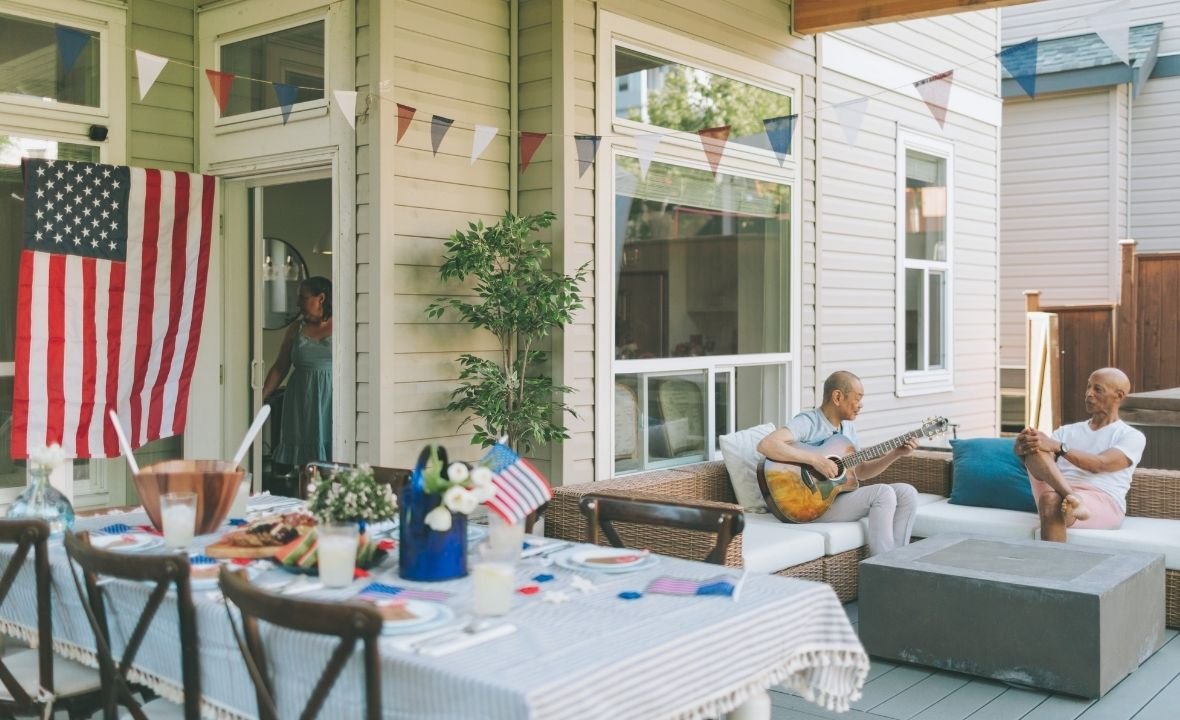
Make the Porch More Comfortable for Evening Use
Summer evenings may introduce additional concerns:
- Insects
- Reduced visibility
- Damp air
- Cooler temperatures
- Wind
- Noise
- Neighbour privacy
Useful additions may include:
- Layered lighting
- Lightweight outdoor throw
- Screen where appropriate
- Portable fan
- Covered drink surface
- Secure candle alternative
- Closed container for food waste
Reduce Mosquito Habitats First
Before relying on repellents or devices, remove water that collects in:
- Plant saucers
- Buckets
- toys
- gutters
- furniture covers
- decorative containers
The EPA identifies eliminating standing water as a core nonchemical mosquito-control measure.
Follow label directions for any insect-control product.
Keep the Porch Connected to the Interior
A porch should relate visually to the adjoining room without needing to match it exactly.
Possible connections include:
- Repeating one colour
- Using a related timber tone
- Carrying a plant theme outdoors
- Choosing similar furniture lines
- Continuing a relaxed or formal style
Avoid using delicate indoor furnishings merely to create continuity.
The transition should feel intentional while still respecting outdoor conditions.
Summer Porch Ideas for Renters
Renters can improve a porch without making permanent changes.
Consider:
- Freestanding chairs
- Folding furniture
- Outdoor rug
- Portable rechargeable lamp
- Removable cushions
- Freestanding screen
- Planters
- Small side table
- Storage basket
- Temporary seasonal decoration
Check the lease, landlord rules or building-management requirements before:
- Drilling
- Painting
- Installing curtains
- Mounting lighting
- attaching items to railings
- using a barbecue
- installing privacy screening
- placing heavy planters
Apartment and multi-unit properties may also restrict items in shared access or emergency routes.
Include Home-Security Considerations
A porch is both an outdoor living area and an entrance to the home.
Design choices should not weaken entrance visibility.
Keep the Door Visible
Avoid placing tall furniture or dense planting where it conceals:
- Door
- lock
- doorbell
- visitor
- package area
Do Not Block Security Cameras
Check the live view after adding:
- Hanging plants
- curtains
- umbrellas
- seasonal decorations
- tall planters
- string lights
Objects close to a camera can block the image or create reflections at night.
HouseMadeClear’s guide to positioning home security cameras without creating blind spots explains how approach routes, obstructions and lighting affect useful coverage.
Avoid Lighting Glare
A bright fixture aimed toward a camera may reduce the usefulness of nighttime footage.
Test the camera view:
- Before lights turn on
- With all porch lights operating
- When a visitor approaches
- When the door opens
- During rain where practical
Keep House Numbers Readable
Emergency responders, delivery drivers and visitors should be able to identify the property.
Do not cover numbers with plants, wreaths or seasonal displays.
Secure Lightweight Objects
Strong wind can move:
- Chairs
- umbrellas
- rugs
- lanterns
- empty planters
- decorations
Follow the product instructions and bring lightweight items inside during severe weather.
For broader entrance-safety guidance, review common home-security mistakes that make break-ins easier.
Common Summer Porch Mistakes
1. Buying Furniture Before Measuring
Why it fails: The pieces may block the door, steps or walkway.
Better approach: Mark the complete furniture dimensions on the floor before ordering.
2. Treating the Porch Only as Decoration
Why it fails: The space looks styled but is uncomfortable to sit in or move through.
Better approach: Plan shade, seating and circulation before accessories.
3. Using Indoor Furniture Outside
Why it fails: Moisture, sunlight and temperature changes may damage unsuitable materials.
Better approach: Choose products designed for the actual level of exposure.
4. Ignoring Afternoon Sun
Why it fails: A pleasant morning porch may become unusable later.
Better approach: Observe sunlight throughout the day before choosing seats and shade.
5. Blocking the Entrance With Plants
Why it fails: Visibility and movement are reduced as plants grow.
Better approach: Consider mature plant size and keep the main route open.
6. Choosing a Rug That Stays Wet
Why it fails: Persistent moisture can create maintenance, odour and slipping problems.
Better approach: Use an appropriate outdoor rug and allow it to drain and dry.
7. Depending on Indoor Electrical Products
Why it fails: Indoor lights, cords or appliances may not be suitable for moisture exposure.
Better approach: Use properly rated products and qualified installation where required.
8. Adding Too Many Small Decorations
Why it fails: The porch becomes visually crowded and harder to clean.
Better approach: Use fewer, larger elements with clear purposes.
9. Forgetting Storage
Why it fails: Cushions, gardening items and toys accumulate around the entrance.
Better approach: Add only the amount of outdoor-rated storage genuinely needed.
10. Hiding Security Equipment
Why it fails: Plants and decorations can block cameras, lights or doorbells.
Better approach: Test visibility after every seasonal update.
A Step-by-Step Summer Porch Plan
Step 1: Measure the Porch
Record the floor area, door movement, steps and fixed features.
Step 2: Observe Sun and Weather
Check morning sun, afternoon sun, shade, wind and rain exposure.
Step 3: Define the Main Purpose
Choose whether the porch is primarily for entrance use, seating, dining or relaxation.
Step 4: Protect the Walkway
Mark a clear route between the steps and door.
Step 5: Choose the Main Furniture
Select appropriately scaled, weather-suitable pieces.
Step 6: Address Shade and Airflow
Make the space comfortable before decorating it.
Step 7: Add Lighting
Plan entrance, movement and ambient lighting.
Step 8: Select the Rug and Textiles
Choose outdoor-suitable materials and test dimensions.
Step 9: Add Plants
Use suitable species and stable containers without blocking visibility.
Step 10: Add Storage
Provide a defined place for regularly used porch items.
Step 11: Review Privacy and Security
Check the door, house number, lights, cameras and approach route.
Step 12: Test the Porch
Use the space during:
- Morning
- Afternoon
- Evening
- Dry weather
- Rainy or windy conditions where safe
Adjust the arrangement before buying more accessories.
Summer Porch Checklist
Before treating the porch as complete, confirm:
- Porch dimensions recorded
- Door opens fully
- Steps and railings remain clear
- Main walkway is unobstructed
- Primary use has been defined
- Furniture is correctly scaled
- Furniture suits outdoor exposure
- Shade has been assessed
- Air movement is adequate
- Rug can drain and dry
- Lighting is suitable for outdoor use
- Cords do not cross walkways
- Plants suit the available light
- Mature plant size has been considered
- Planters are stable
- Standing water is removed
- House number remains visible
- Camera and doorbell views are clear
- Storage does not obstruct access
- Rental or building rules have been checked
- Lightweight items can be secured during bad weather
Final Thoughts
A successful summer porch is not defined by how many seasonal accessories it contains.
It should first provide:
- Clear access
- Comfortable seating
- Appropriate shade
- Useful lighting
- Weather-suitable materials
- Manageable maintenance
- Appropriate visibility around the entrance
Begin with the structure and daily use of the space. Measure before buying, protect the main walkway and observe how sun, wind and rain affect the porch.
Then add colour, plants and decoration selectively.
The best porch will not only look inviting from the street. It will also be comfortable enough to use, straightforward to maintain and practical throughout the summer.
For more ideas that combine design with everyday function, explore the Housemadeclear Home Improvement section.
Frequently Asked Questions
How can I make my porch comfortable for summer?
Begin with shade, suitable seating and air movement. Keep the walking route clear, use outdoor-rated textiles and add evening lighting. Observe the porch during the hottest part of the day before deciding where to place furniture.
What furniture works best on a small porch?
A narrow bench, compact chairs, a folding chair or a small bistro table may work well. The furniture should not block the front door, steps or main walkway.
How can I decorate a porch without spending much?
Rearrange existing furniture, reuse suitable outdoor items, refresh cushion covers, add one or two planters and improve lighting. Focus on one clear colour direction instead of buying many small decorations.
Can I use indoor furniture on a covered porch?
A covered porch can still experience humidity, temperature changes and wind-driven rain. Furniture should be suitable for the actual conditions and used according to the manufacturer’s instructions.
How do I add privacy to a front porch?
Use partial screening, outdoor curtains, a freestanding screen, trellis or strategically placed planters. Avoid completely hiding the entrance, house number, doorbell or security camera.
What type of lighting should I use on a porch?
Use lighting and electrical products rated for the location and exposure conditions. Combine entrance lighting with lower-level movement lighting and softer ambient light where appropriate.
How do I keep mosquitoes away from a porch?
Remove standing water from plant trays, buckets, gutters and other containers. Screens, air movement and appropriately used registered repellents may also help, depending on the porch and local conditions.
Where should plants be placed on a porch?
Place plants where they receive suitable light without blocking the door, steps, railings, house number or main walkway. Consider each plant’s mature size and use stable containers.